It bothers me that the Supreme Court struck down the DC handgun ban. Putting aside the issues of constitutional interpretation, let's look at gun control's role in public safety.
As gun control opponents are so fond of saying, "if we outlaw guns, only outlaws will have guns." They maintain a romanticized notion that the good guys with guns can fight the bad guys with guns in a self-reliant form of defense and vigilante justice. The problem is that it doesn't end up working that way. A person who obtains a handgun legally, with the best of intentions, has a better chance of winding up with an injured family member than an injured assailant. But the gun makes its owner feels safer, more self-reliant, and more capable of defending his family from the world's evils. The gun's benefit is psychological, not practical.
On the other hand, if we outlaw guns then only the outlaws have guns. This can only make law enforcement easier. It's hard for police to catch a gun-toting felon in the act of misbehaving, but when guns are illegal having one, or being seen with one, becomes probable cause for further investigation.
I'm not a proponent of the police state. I'm a fan of individual liberties. Gun control, as with any control, should only be as stringent as needed to fit the problem that it's intended to solve. In my opinion, DC's murder rate merits the banning of handguns. Public policy should be based on solutions that fit their problems, not blind psychological comfort.
Monday, June 30, 2008

Monday, June 23, 2008
Thoughts on food and sustainability:
Ultimately, what sustainability requires of us is change in global society as a whole. We need the recovery and reconstitution of community generally, not simply in relation to food. But though we may be able to think like mountains, we must act as human beings. To begin the global task to which we are called, we need some particular place to begin, some particular place to stand, some particular place in which to initiate the small, reformist changes that we can only hope may some day become radically transformative.
We start with food. Given the centrality of food in our lives and its capacity to connect us materially and spiritually to each other and to the earth, we believe that it is a good place to start.
- Wisconsin Foodshed Research Project, Coming Into the Foodshed
Agriculture and Human Values 13:3 (Summer): 33-42, 1996
Jack Kloppenburg, Jr., John Hendrickson and G. W. Stevenson
http://www.cias.wisc.edu/foodshed/pubsntools/comingin.htm
We start with food. Given the centrality of food in our lives and its capacity to connect us materially and spiritually to each other and to the earth, we believe that it is a good place to start.
- Wisconsin Foodshed Research Project, Coming Into the Foodshed
Agriculture and Human Values 13:3 (Summer): 33-42, 1996
Jack Kloppenburg, Jr., John Hendrickson and G. W. Stevenson
http://www.cias.wisc.edu/foodshed/pubsntools/comingin.htm
Thursday, May 22, 2008
Done!
Done with the sweater and done with school. It feels good.
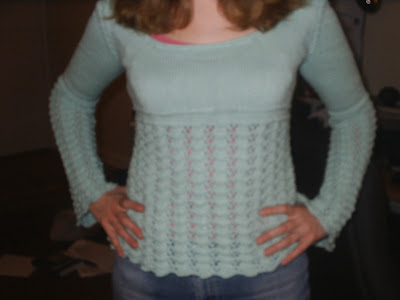
Isn't it pretty? Doesn't it fit awesomely? I'm visiting my family on Cape Cod this weekend and I think it will be perfect for the chilly Cape spring.
I also wanted to show off my window garden.
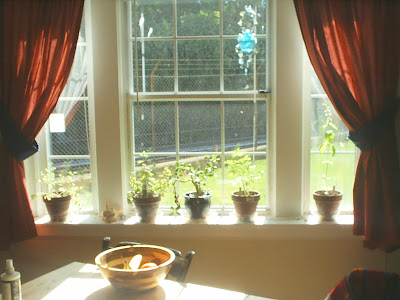
From the left, that's cilantro, spearmint, jade, parsley, and basil.
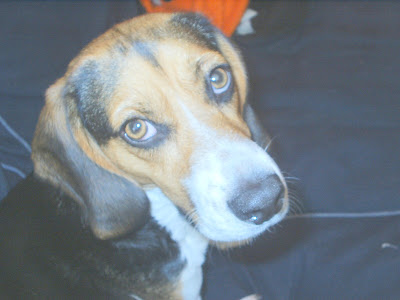
And here's the obligatory Franklin-looking-cute.
Isn't it pretty? Doesn't it fit awesomely? I'm visiting my family on Cape Cod this weekend and I think it will be perfect for the chilly Cape spring.
I also wanted to show off my window garden.
From the left, that's cilantro, spearmint, jade, parsley, and basil.
And here's the obligatory Franklin-looking-cute.
Sunday, May 11, 2008
Friday, May 9, 2008

Wednesday, May 7, 2008
Thoughts on gas prices...
Clinton and McCain's plan to drop the gas tax for the summer is a bad idea that won't actually lower prices for consumers. Bottom line: oil companies operate an oligopoly and demand is inelastic, so savings go to producers instead of consumers.
The environmentalist in me say that rising gas prices are a good thing. They encourage people to conserve and stimulate investment in alternatives. But rising energy prices have the greatest effect on poor people's budgets, and that's not cool. In the long run we can develop public transportation and increase fuel efficiency standards, but in the short run people have to get to work.
The solution: gas stamps. They would operate kinda like food stamps. You buy a stamp at a reduced price (say $2 or $3) that gets you a gallon of gas. The amount of stamps people can buy is limited. You could either have a fixed quantity per person, or a variable quantity based on income and driving needs. It's like a ration, except the quantity allocated to each person is still market-based. If you want more gas than you can buy with your permits, you pay the high market prices. In fact, market prices would likely increase. So, people can drive as they need to and conservation is still encouraged.
The environmentalist in me say that rising gas prices are a good thing. They encourage people to conserve and stimulate investment in alternatives. But rising energy prices have the greatest effect on poor people's budgets, and that's not cool. In the long run we can develop public transportation and increase fuel efficiency standards, but in the short run people have to get to work.
The solution: gas stamps. They would operate kinda like food stamps. You buy a stamp at a reduced price (say $2 or $3) that gets you a gallon of gas. The amount of stamps people can buy is limited. You could either have a fixed quantity per person, or a variable quantity based on income and driving needs. It's like a ration, except the quantity allocated to each person is still market-based. If you want more gas than you can buy with your permits, you pay the high market prices. In fact, market prices would likely increase. So, people can drive as they need to and conservation is still encouraged.
Tuesday, May 6, 2008
Progress on the Sweater

I've done the front, back, and most of the sleeve. The end is in sight, but I fear the weather will be too hot to wear it by the time it is done. The semester is coming to a close and I have my hands full with term papers. Two of them, a total of ~35 pages, are on Cape Wind. I've really gotten into wind energy this semester. I think it is the best energy source to develop right now. We need clean, secure domestic renewable energy, and the costs of producing wind power are very close to fossil fuels. A carbon tax would probably make wind power the cheapest option. I'm actually toying with the idea of starting a blog all about wind power development in the US, but given how infrequently I update my existing blog, I wonder if I would neglect that project as well. It could be put on the summer project list, but I already have a full time internship, and extensive reading list, a demanding hound dog, and I want to learn web design.
Speaking of the bagle hound:
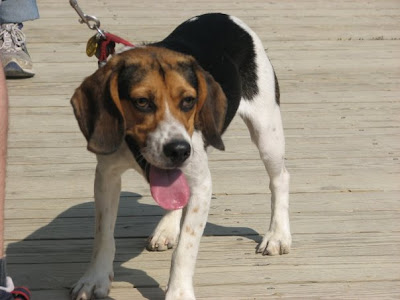
Isn't he cute!
Subscribe to:
Posts (Atom)